What Happens to Your Brain When You Don't Sleep — A Slow-Motion Crime Scene
Issue 11 | The Three Pillars of Brain Health, Part 2. Last week we showed you what your brain does during sleep. This week, we show you what happens when it can't.
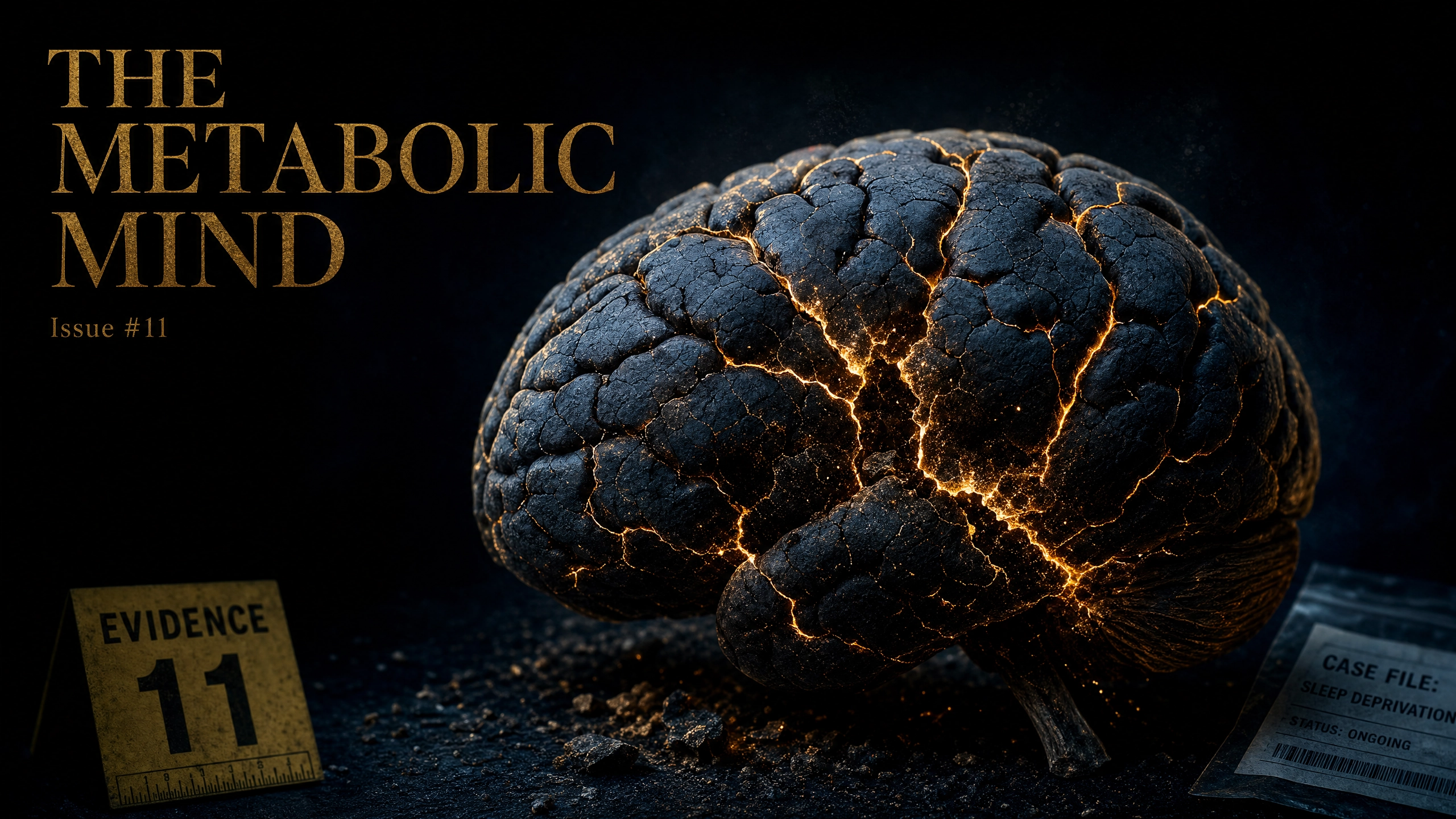
Part 2 of 3 — The Three Pillars of Brain Health
In Issue #10, we went behind the curtain of your brain's night shift — the glymphatic cleaning system, the sleep stages, the emotional editing of REM sleep, and why your brain needs clean fuel to do its deepest work. Every issue is available in the archive for all subscribers.
This week, we turn the story around. We look at what happens when the night shift doesn't run.
You've met someone like this. You might be someone like this. Two jobs. Up before 5 AM. Still answering messages at midnight. Three hours of sleep on a good night. Four on a great one. Seven days a week, month after month. And here's the thing — they've adapted. Or so they believe.
The exhaustion that would have laid them flat six months ago is now just a baseline. They don't feel as bad as you'd expect. They're functional. They're managing.
But here's what I've learned, and what the research confirms with uncomfortable clarity: the ability to feel impaired goes away before the impairment itself does. In study after study, people who are chronically sleep-deprived lose the capacity to accurately judge how much their performance has declined. They believe they're managing because they can no longer feel the gap between who they are now and who they were before the deprivation began.[1]
Clinical Observation
"The ability to feel impaired goes away before the impairment itself does. The brain, when it is gradually being damaged, is a very poor judge of its own damage."
— Van Dongen et al. (2003), Sleep[1]
The brain, when it is gradually being damaged, is a very poor judge of its own damage. So let's look at what's actually happening. Not with vague phrases like "it's bad for you." Let's go through it system by system, mechanism by mechanism, and let the science speak for itself.
What's Happening to the Brain Itself
A 2024 study from UCSF (University of California, San Francisco) used machine learning — a type of computer analysis that can detect patterns in complex data — to analyze brain scans from thousands of people. They measured something called brain age — the biological age of the brain based on its structure, rather than the person's chronological age. What they found was striking: people with moderate sleep problems had brains that were biologically 1.6 years older than they should be. People with severe sleep problems had brains that were 2.6 years older — even after controlling for every other variable: weight, exercise, diet, alcohol use, existing health conditions.[2]
Your brain is aging faster than your body. Every year of poor sleep costs you more than a year of brain age.
And it's not just accelerated aging. The brain is changing structurally. Remember amyloid-beta and tau — the toxic proteins from Issue #10 that the glymphatic cleaning system washes away during deep sleep? Without adequate deep sleep, those proteins accumulate. Silently. Each night they build a little more. Each night the glymphatic system falls a little further behind. Over months and years, they are constructing the biological scaffolding of future dementia — specifically Alzheimer's disease — inside a brain whose owner has no symptoms yet and no warning.
The Number You Need to Sit With
53% higher risk of developing dementia
The American Stroke Association — one of the most authoritative medical organizations on brain health — now cites insomnia as associated with a 53% higher risk of developing dementia. Not a 10% bump. Fifty-three percent. That's not a footnote — that's a headline.[4]
Neuroinflammation: The Hidden Fire
Before we go further, you need to understand a term that will connect almost everything in this issue. The term is neuroinflammation — which simply means inflammation inside the brain.
You already know what inflammation looks like on the outside: a twisted ankle that swells up red and hot, a cut that gets puffy around the edges. That's your immune system doing its job — sending immune cells to the site of injury, releasing chemical signals to neutralize threats and begin repair. That short-term, targeted inflammation is your friend. It's essential.
The problem comes when inflammation never turns off. When instead of a rapid response team that dispatches and withdraws, you have a fire that smolders continuously at a low level — never quite going out, slowly burning the tissue it was supposed to protect.
In the brain, this chronic inflammation is driven by the brain's own immune cells called microglia (micro = small, glia = support cell). Microglia normally act as the brain's maintenance crew, trimming unnecessary neural connections and clearing debris. But when they're chronically activated — by accumulated amyloid-beta, by poor sleep, by chronic stress, by poor diet — they shift into attack mode. They start releasing pro-inflammatory chemical signals called cytokines (molecular messenger proteins that activate the immune response), including molecules called Interleukin-1 beta (IL-1β), Interleukin-6 (IL-6), and TNF-alpha (Tumor Necrosis Factor-alpha) — all of which directly damage neurons and disrupt the blood-brain barrier (the selective filter of tightly packed cells lining the brain's blood vessels, which normally prevents harmful substances in the bloodstream from entering the brain).
What Does Neuroinflammation Look Like in a Real Person?
Neuroinflammation doesn't announce itself on a standard blood test. It doesn't produce a single obvious symptom. Instead, it wears many masks — and most people wearing those masks don't know what they're looking at.
Brain fog and slowed thinking. Neuroinflammation impairs the precision of synaptic transmission — the electrical handoff between neurons at the junction called a synapse (the tiny gap between one neuron's output terminal and the next neuron's input). When cytokines are elevated, this signal becomes noisier and less efficient, like trying to have a phone conversation through heavy static.
Depression. This one is crucial — and profoundly misunderstood. Major depression is not simply a matter of "not enough serotonin." PET scan studies (a type of brain imaging that measures metabolic activity by tracking radioactive tracers in the blood) have shown that people with major depressive disorder have 30% more brain inflammation in specific regions compared to healthy controls.[5] The inflammatory cytokines directly interfere with the synthesis and receptor function of the neurotransmitters serotonin, dopamine, and norepinephrine. Depression, in many cases, is the brain on fire. Antidepressants help with the symptoms — but they don't touch the fire.
Anxiety. The amygdala — the brain's emotional alarm center — is exquisitely sensitive to inflammatory cytokines. When IL-1β and TNF-alpha are elevated, the amygdala becomes hyperactive, triggering threat responses to stimuli that would not normally register as dangerous. Elevated neuroinflammation is an independent predictor of anxiety disorders across multiple research populations.
Migraines. Migraines involve a phenomenon called cortical spreading depression (CSD) — a wave of electrical suppression that spreads across the brain's outer layer (the cortex), followed by an intense neuroinflammatory response in the trigeminal nerve system (the major sensory nerve of the face and head). The association between migraines, depression, and anxiety is so strong that people with anxiety are five times more likely to develop migraines — because all three share neuroinflammation as a common underlying driver.
Parkinson's disease. The death of dopamine-producing neurons in a region called the substantia nigra (Latin for "black substance") is what causes the tremors, rigidity, and slowed movement of Parkinson's disease. This neuronal death is preceded and accompanied by decades of microglial activation and neuroinflammation.
Multiple Sclerosis (MS). MS is the most visible face of neuroinflammation in medicine — an autoimmune disease in which immune cells attack myelin (the fatty protective sheath wrapped around nerve fibers that allows electrical signals to travel quickly and efficiently). The result is progressive neurological disability.
For the otherwise healthy 45-year-old sleeping 4 hours a night, none of these diagnoses may apply yet. But the process that leads to them is already underway. The fire is already burning at a low level. The symptoms — the foggy thinking, the irritability, the poor sleep quality, the declining energy — are the early warning signals of neuroinflammation in progress.
Related Reading
Brain fog is often the first visible symptom of neuroinflammation — and it's frequently misdiagnosed as stress or aging.
5 Signs Your Brain Fog Is a Metabolic Problem →The Cortisol Catastrophe: The Stress Hormone That Never Rests
Of all the damage chronic sleep deprivation does to the body, nothing integrates it more thoroughly than what it does to cortisol — the body's primary stress hormone, produced by the adrenal glands (two small, triangular glands sitting on top of each kidney).
Cortisol has a beautiful, precise natural rhythm in a healthy body. It follows what's called a diurnal (daytime) pattern: lowest in the early hours of deep sleep — when the body is doing its most profound repair work — then gradually rising toward morning, cresting 20 to 30 minutes after waking, giving you energy, alertness, and readiness. By evening it tapers, allowing melatonin (the darkness hormone produced by the pineal gland, a small endocrine gland in the center of the brain) to rise and signal the body for sleep.
This rhythm governs almost everything: metabolism, immune function, blood pressure, inflammation, memory formation, and emotional regulation. It's one of the body's most fundamental operating cycles. Chronic sleep deprivation destroys this rhythm.
The system that controls cortisol is called the HPA axis — which stands for Hypothalamic-Pituitary-Adrenal axis. It's the hormonal command-and-control chain for the stress response: the hypothalamus (a small but extraordinarily powerful control center at the base of the brain) signals the pituitary gland (the "master gland" of the endocrine system) to signal the adrenal glands to release cortisol.
During healthy N3 deep sleep, the HPA axis gets actively suppressed — the hypothalamus essentially tells the whole system to stand down. This is the body's deepest rest. When there is no deep sleep, this shutdown never occurs. Cortisol stays elevated at night when it should be at its lowest. The stress system remains partially armed around the clock.[6][18]
Chronically elevated cortisol is directly neurotoxic — it is literally toxic to brain neurons, particularly in the hippocampus (the brain's memory center that is also the first region destroyed by Alzheimer's disease). Long-term cortisol excess causes measurable hippocampal shrinkage. This is why chronic stress and chronic sleep deprivation cause worsening memory: they're eroding the brain structure that memory depends on.
Beyond the brain, chronically elevated cortisol drives:
- Visceral fat accumulation — fat deposited specifically around the abdominal organs, the most metabolically dangerous type
- Insulin resistance — the condition in which cells stop responding normally to insulin's signal to absorb blood sugar, leading toward Type 2 Diabetes Mellitus (T2DM)
- Muscle catabolism — the breakdown of muscle tissue for fuel, accelerating age-related muscle loss
- Immune suppression — counterintuitively, chronic high cortisol weakens immune defenses while simultaneously driving inflammation
What Sleep Deprivation Does to Your Heart
In a healthy body, blood pressure drops by 10 to 20% during the night — a phenomenon cardiologists call nocturnal dipping. This isn't trivial. That nightly pressure drop is when the heart rate slows, the arteries relax, and the entire cardiovascular system gets its deepest rest. Without it, the heart muscle and arterial walls are under mechanical and chemical stress 24 hours a day, 7 days a week.
Sleep deprivation eliminates nocturnal dipping. Blood pressure stays elevated all night. And the same cortisol that is disrupting your brain is also acting as a vasoconstrictor (a chemical that causes blood vessels to tighten and narrow), keeping your arteries in a state of elevated tension around the clock.
Over months and years, this sustained pressure and the accompanying inflammation drive atherosclerosis — the buildup of fatty, calcified plaques inside the walls of arteries. This arterial plaque narrows the channel through which blood flows, reduces oxygen delivery to the heart muscle, and creates the structural conditions for the blood clots that cause myocardial infarction (MI) — more commonly called a heart attack.
Cardiovascular Risk Data
Sleeping fewer than 6 hours per night is associated with a 20% higher risk of heart attack. People with multiple overlapping sleep problems — difficulty falling asleep, waking frequently, unrestorative sleep — who also sleep fewer than 6 hours per night may carry nearly three times the heart disease risk of normal sleepers. These are dose-response relationships consistent across multiple large-scale studies.[8][9]
The Immune System Crash
Your immune system depends on sleep more than most people realize — not just for general vigor, but for specific, sophisticated functions that simply cannot happen while you're awake. During sleep, especially deep N3 sleep, the immune system deploys and calibrates its forces.
One category of immune cell called natural killer (NK) cells — named literally for their function: they patrol the body searching for cancer cells and virus-infected cells and destroy them — are particularly sleep-dependent.
One Night. 28% Drop.
One night of restricting sleep to just 4 hours reduced natural killer (NK) cell activity to 72% of normal function. That's a 28% drop in your anti-cancer surveillance capacity after a single night of short sleep. Your immune patrol is running with a third of its officers missing.[12]
Sustained sleep deprivation triggers a persistent low-grade inflammatory state — elevated levels of IL-6 and C-reactive protein (CRP) (a protein the liver produces in response to widespread inflammation, used clinically as a marker of systemic inflammatory activity) — the same inflammatory profile associated with cardiovascular disease, Type 2 Diabetes Mellitus, autoimmune conditions, and neurodegeneration.
The Body-Wide Damage: Beyond Brain and Heart
The gut. Elevated cortisol from chronic sleep deprivation increases intestinal permeability — it literally loosens the tight junctions (the protein connections between cells that normally seal the intestinal lining like a tight zipper) between the cells lining your intestinal wall. This creates microscopic gaps that allow bacterial toxins, incompletely digested food particles, and other substances to leak from the intestinal tract into the bloodstream — a condition sometimes called leaky gut. Once these substances enter systemic circulation, they trigger immune activation throughout the body, including the brain, adding fuel to the neuroinflammatory fire.[13][14]
Metabolism. Even two or three nights of short sleep measurably reduces insulin sensitivity. Simultaneously, two key appetite hormones get disrupted: ghrelin (the "I'm hungry" hormone produced primarily in the stomach) rises, and leptin (the "I'm full" signal produced by fat cells) falls. The sleep-deprived brain is chemically driven toward overeating — specifically high-sugar, high-fat foods — even when adequate calories have been consumed. This is not a lack of willpower. It is endocrinology.[15]
The kidneys. Chronically elevated inflammatory markers, blood pressure dysregulation, and cortisol excess accelerate aging of the kidney's filtering units — called nephrons (the microscopic functional units of the kidney). Chronic sleep deprivation is an independent risk factor for chronic kidney disease (CKD) — the progressive loss of kidney filtration function that affects over 37 million Americans.
Insomnia vs. Not Getting Enough Sleep: They're Different Problems
This distinction matters enormously — both for understanding risk and for choosing the right approach.
Sleep restriction is what happens when a person voluntarily doesn't give themselves enough time in bed — working late, waking early, choosing activity over sleep. They could sleep if they made time, but they don't.
Insomnia is something entirely different. Insomnia is the chronic inability to fall asleep, stay asleep, or achieve restorative sleep despite having adequate opportunity to do so. The person is in bed. They want to sleep. They simply cannot.
The most common form — called psychophysiological insomnia — is a conditioned state of hyperarousal. It typically begins with an identifiable trigger: a stressful event, illness, a major life change. Normal sleep disruption follows. But then the brain makes a critical error: it begins associating the bed itself with wakefulness and anxiety, rather than sleepiness. The expectation of not sleeping becomes a self-fulfilling prophecy.
The 53% increased dementia risk applies to both groups. The brain doesn't care whether its cleaning system is being shortchanged because someone chose to work late, or because someone lay awake in bed unable to sleep. The amyloid accumulates either way.
The treatments, however, are different. For people who are voluntarily restricting sleep, the solution is behavioral: protect the time. Make the choice. For people with insomnia, the first-line treatment — superior to any sleep medication in the research literature — is CBT-I (Cognitive Behavioral Therapy for Insomnia) — a structured, evidence-based psychological treatment that works by breaking the conditioned arousal cycle and re-training the brain to associate the bed with sleepiness rather than wakefulness.[16][17]
Key Elements of CBT-I
- Sleep restriction therapy: Temporarily reducing time in bed to build sleep pressure — counterintuitive, but highly effective
- Stimulus control: Using the bed only for sleep
- Cognitive restructuring: Replacing catastrophic thoughts about sleeplessness with more accurate, calmer beliefs
CBT-I produces durable results that persist after the treatment ends — something sleep medications cannot claim.
Growth Hormone: The Repair Signal That Only Arrives at Night
Growth hormone (GH) is produced by the pituitary gland and released in response to a signal called GHRH — Growth Hormone Releasing Hormone — from the hypothalamus. In adults, growth hormone has nothing to do with getting taller. It is the body's primary anabolic (tissue-building) and repair signal. It tells every tissue: heal, rebuild, regenerate.
The Window You Can't Miss
Up to 75% of the day's total growth hormone is released in a single pulse during the first N3 deep sleep cycle.
This typically occurs between 10 PM and 2 AM in people with normal sleep schedules. This is not a trickle throughout the night. It is a concentrated surge. Miss that window — because you went to bed late or didn't get deep enough — and the pulse doesn't simply shift to later. It is largely lost for that night.[20][21]
A 2025 UC Berkeley study published in the prestigious journal Cell revealed another layer: the growth hormone released during sleep actually travels back to the brainstem and modulates the sleep-wake circuits, helping regulate sleep quality itself. Sleep drives growth hormone; growth hormone fine-tunes sleep. They maintain each other.[21]
What Kills the Growth Hormone Pulse
Sugar before bed. When you eat sugar — or anything that rapidly raises blood glucose, including fruit juice, sweetened yogurt, crackers, ice cream, or bread — your pancreas releases insulin. Elevated insulin triggers somatostatin (a hormone that inhibits growth hormone release — essentially the brake pedal for GH production). At the exact window when your brain should be triggering the night's most important repair signal, you've chemically blocked the door.
Alcohol. Alcohol is a two-pronged growth hormone suppressor. First, it fragments sleep architecture — it may help you fall asleep faster, but it suppresses N3 deep sleep and REM sleep in the second half of the night. Second, alcohol directly suppresses growth hormone secretion at the level of the hypothalamus and pituitary. Studies document that over 50% of chronic heavy drinkers show an abnormally blunted growth hormone response.[23]
High-glycemic dinner. Any meal high in refined carbohydrates — white rice, pasta, bread, processed foods — consumed in the hours before bed can blunt the growth hormone pulse through the same insulin-somatostatin mechanism. Eating a low-glycemic dinner (protein, healthy fats, fibrous vegetables) preserves the growth hormone window.
Chronic stress and elevated cortisol. Cortisol and growth hormone are biochemical opponents. When cortisol is chronically elevated — as it is in sleep deprivation — growth hormone secretion is actively suppressed. They were designed to trade shifts: cortisol high during the day for wakefulness and energy, growth hormone high at night for repair. When the cortisol shift never ends, the growth hormone shift never begins.
What Happens When Growth Hormone Is Chronically Low?
Ask any physician who treats adult growth hormone deficiency — whether from pituitary disease, surgery, or from decades of poor sleep — and you'll hear a consistent clinical picture:
The Clinical Picture of Chronic GH Deficiency — Does This Sound Familiar?
- Accumulation of visceral abdominal fat despite reasonable diet and exercise
- Loss of muscle mass and strength
- Declining bone density, increasing fracture risk
- Worsening cholesterol — LDL rises, HDL falls
- Deep, unrestorative fatigue that doesn't respond to more sleep
- Cognitive impairment — impaired memory, processing speed, and executive function
- Anxiety and depression
- Reduced exercise capacity and slower recovery
- Increased cardiovascular risk through worsening metabolic profile
Read that list carefully. Does it sound familiar? It is the precise symptom profile of someone who has been sleeping 4 hours a night for years — because the chronic growth hormone deficiency of poor sleep produces a clinical picture nearly identical to medically diagnosed adult growth hormone deficiency.[24][25]
Related Reading
The metabolic consequences of poor sleep — insulin resistance, visceral fat, cortisol dysregulation — are exactly what therapeutic ketosis addresses at the cellular level.
What Is Therapeutic Ketosis? →Coming Up in Issue #12
We've spent two issues mapping the damage. Issue #10 showed you what your brain is supposed to do during sleep. This week, we showed you what happens when it can't. Issue #12 is where the story turns. We bring together all three pillars: sleep, exercise, and BHB — beta-hydroxybutyrate — and show you how each one works, what it produces inside the brain, and how all three work together in a synergy that can reverse much of what we've described in these first two issues. The damage is real. But so is the recovery.
Is Your Brain Showing Signs of Sleep-Driven Damage?
The symptoms described in this article — brain fog, fatigue, weight gain, mood changes, poor memory — are often the first visible signs of neuroinflammation and cortisol dysregulation. A discovery call with Dr. Dublin can help you understand what's happening and what to do about it.
Schedule a Discovery Call →Free Download: The Chains We Choose
Dr. Dublin's guide to breaking the metabolic patterns — including sleep disruption, cortisol dysregulation, and neuroinflammation — that keep the brain trapped in a cycle of decline.
Download Free Guide →Continue Reading
References
1. Van Dongen, H.P.A. et al. (2003). "The Cumulative Cost of Additional Wakefulness." Sleep, 26(2), 117–126. Link
2. Winer, J.R. et al. (2024). "Sleep disturbances and brain aging: UCSF Machine Learning Study." JAMA Neurology. Link
3. Lv, Y.N. et al. (2022). "Sleep deficiency promotes Alzheimer's disease development and progression." Frontiers in Neurology, 13, 1053942. Link
4. Pase, M.P. et al. (2024). "Impact of Sleep Disorders on Brain Health." American Stroke Association Scientific Statement. Link
5. Felger, J.C. & Lotrich, F.E. (2013). "Inflammatory Cytokines in Depression." Neuropsychopharmacology, 38(9). Link
6. Bhatt, S. et al. (2022). "Acute Sleep Deprivation Disrupts Emotion, Cognition, Inflammation, and Cortisol." Frontiers in Behavioral Neuroscience. Link
7. Spiegel, K. et al. (1999). "Impact of sleep debt on metabolic and endocrine function." Lancet, 354(9188), 1435–1439. Link
8. Liu, Y. et al. (2019). "Sleep Duration and Cardiovascular Disease." Circulation. Link
9. Laffan, A. et al. (2023). "Multiple sleep problems tripling heart disease risk." American Heart Association Scientific Sessions. Link
10. Opp, M.R. & Krueger, J.M. (2015). "Sleep and Immunity." American Journal of Physiology. Link
11. CDC/NIOSH. (2025). "Sleep and the Immune System." NIOSH Training Module 2. Link
12. Besedovsky, L. et al. (2012). "Sleep and immune function." Pflügers Archiv - European Journal of Physiology, 463, 121–137. Link
13. Henry Ford Health. (2021). "How Lack of Sleep Affects Gut Health." Henry Ford Health Blog. Link
14. Vaccaro, A. et al. (2020). "Sleep loss can cause death through accumulation of reactive oxygen species in the gut." Cell, 181(6). Link
15. Spiegel, K. et al. (2004). "Sleep curtailment associated with decreased leptin levels, elevated ghrelin levels, and increased hunger." Annals of Internal Medicine. Link
16. Lancee, J. et al. (2022). "Effectiveness of CBT-I on insomnia and mental health." PMC. Link
17. Morin, C.M. et al. (2020). "Cognitive Behavioral Therapy for Insomnia." Sleep Medicine Reviews. Link
18. NIH/Endotext. (2025). "HPA Axis and Sleep." NCBI Bookshelf NBK279071. Link
19. Leproult, R. & Van Cauter, E. (2011). "Effect of Sleep Deprivation on Insulin Resistance." JAMA, 305(24), 2557–2558. Link
20. Van Cauter, E. et al. (2000). "Age-related changes in slow wave sleep and REM sleep and relationship with growth hormone and cortisol levels in healthy men." JAMA, 284(7), 861–868. Link
21. UC Berkeley News. (2025). "Sleep strengthens muscle and bone by boosting growth hormone." Link
22. Allied Academies. (2021). "Regulation of Human Growth Hormone and Foods That Lower HGH." Link
23. PubMed. (1981). "Transient suppression of growth hormone secretion after chronic ethanol intake." PMID: 356654. Link
24. Molitch, M.E. et al. (2011). "Adult Growth Hormone Deficiency: Benefits, Side Effects, and Risks." PMC3671347. Link
25. Cedars-Sinai. (2020). "Adult Growth Hormone Deficiency." Cedars-Sinai Health Library. Link
Dr. Barry Dublin, MD
Physician specializing in metabolic medicine and therapeutic ketosis. Creator of the SKLeTT Protocol — Specific Ketone Level Titration Therapy — and founder of NeuraLift. Over 30 years of clinical experience in brain energy optimization and weight management.