Your Brain Has a Night Shift — And What It Does Will Blow Your Mind
In 2012, a neuroscientist discovered that the brain runs a dedicated waste-removal system while you sleep — and that without it, the proteins that cause Alzheimer's disease accumulate in a single night. This is the science of why sleep is not rest. It is repair.
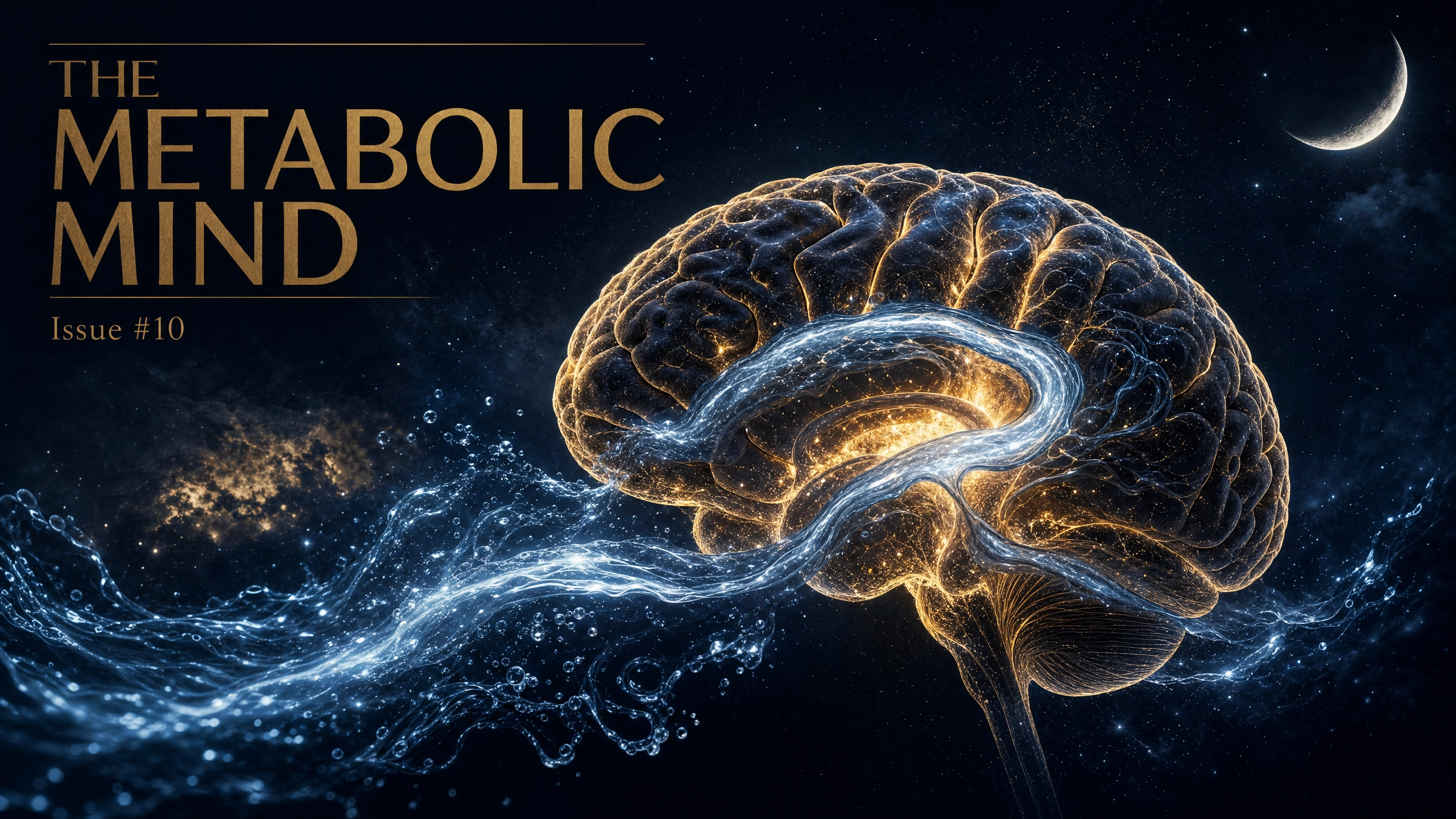
Let me start with a question that sounds simple but isn't. What is your brain doing right now while you read this? Firing. Connecting. Processing. Your neurons — the nerve cells in your brain, about 86 billion of them — are sending tiny electrical signals back and forth at incredible speed, like a city's power grid running at full capacity. Every thought, every word you read, every memory you retrieve requires energy. Massive amounts of it.
In fact, your brain makes up only about 2% of your body weight, yet it consumes roughly 20% of your body's total energy every waking hour. Think about that. A three-pound organ burning one-fifth of everything your body produces. It's like having a high-performance sports car engine inside an ordinary vehicle — constantly running hot, constantly demanding fuel.
Now here's what nobody talks about. All that work — all that firing, connecting, and processing — generates waste. Every time a neuron (nerve cell) fires, it releases a tiny amount of a toxic protein as a normal byproduct of doing its job. Multiply that by 86 billion neurons, firing all day long, and you start to understand the problem. The brain is its own industrial city. And every industrial city produces garbage.
So here's the question that should keep you up at night — or rather, the question that explains why you need to go to sleep: Where does all that garbage go? The answer was discovered only in 2012, and it changed everything we thought we knew about why sleep exists.
The Night Shift Nobody Knew About
In 2012, a neuroscientist named Maiken Nedergaard at the University of Rochester made one of the most important brain discoveries of the 21st century. She found that the brain has its own dedicated waste-removal system — a plumbing network that had been hiding in plain sight for centuries of neuroscience research.[1]
She called it the glymphatic system — and the name is a clever mashup. It works like the lymphatic system (your body's main waste-drainage network, the system of tubes and nodes that drains waste from your tissues into the bloodstream), but it operates inside the brain, and it's run by a specific type of brain support cell called glial cells — the cells that surround and support your neurons. Glial + lymphatic = glymphatic.[2][3]
But here's the part that changes everything: the glymphatic system is almost completely inactive while you're awake. It only fully turns on when you sleep.
The City Analogy
Think of your brain as a city. During the day, the streets are packed — traffic everywhere, businesses open, activity at full blast. The garbage trucks can't work efficiently in that chaos. But at night, when the city quiets down and the streets clear out, the trucks come out. They go street by street, flushing the gutters, collecting the waste, washing the roads clean. That's your glymphatic system. And sleep is when the trucks run.
Here's the precise mechanism, because it's genuinely fascinating. Every artery entering your brain is wrapped in a sleeve of open space — a tiny channel that runs between the artery wall and the surrounding brain tissue, like a gap between a pipe and the wall it runs through. When you fall into deep sleep, two things happen at once. First, the brain cells themselves shrink slightly — by about 60% — opening up the gaps between them like a sponge being squeezed in reverse, suddenly creating room for fluid to flow. Second, the pulsing of blood through the arteries acts like a pump, driving a clear fluid called cerebrospinal fluid (CSF) — the brain's own private bath water — through those channels at high pressure.[6]
That cerebrospinal fluid rushes through the brain tissue like a high-pressure hose through a filter. It picks up the waste dissolved in the fluid between brain cells, carries it out through the other side, and drains it down through lymphatic vessels in the brain's outer lining — eventually reaching the lymph nodes in your neck, where the body's regular disposal system takes over. A 2025 study confirmed the exact timing signal: rhythmic contractions of blood vessel walls, triggered specifically during deep sleep, are what drive the whole cleaning cycle. You can't fake it. You can't do it while resting on the couch. The full system only engages in deep sleep.[15]
The Suspects: What's Being Cleaned Out, and Why It Matters So Much
Not all brain waste is created equal. Two specific proteins sit at the center of this story — and if you recognize their names, it's because they've been in the headlines for years in the context of Alzheimer's disease.
Amyloid-beta (pronounced am-ih-loyd BAY-tuh) is a protein fragment produced as a normal byproduct every time a neuron fires. In normal, well-rested brains with a working glymphatic system, it gets washed away before it can accumulate. But when it's not cleared properly — because sleep is too short, too shallow, or too disrupted — amyloid-beta starts sticking to itself. It clumps into hardened deposits called plaques, which physically clog the spaces between neurons and trigger a dangerous immune reaction in the brain. These plaques are the defining physical signature of Alzheimer's disease.[4]
Tau protein (rhymes with "wow") normally works inside neurons like a set of railroad tracks, keeping the cell's internal transportation system in perfect alignment so nutrients and signals can travel from one end of the neuron to the other. But when tau accumulates and gets chemically modified by a process called phosphorylation (the addition of a phosphate molecule that changes its shape and function), it collapses those tracks and forms tangled knots called neurofibrillary tangles — literally knotted wires inside the cell. Tau tangles physically destroy neurons from the inside out.[5]
The Number You Need to Sit With
Just one single night of sleep deprivation raises amyloid-beta levels in the human brain by approximately 5%, in the exact regions most vulnerable to Alzheimer's. A Washington University study found that sleep-deprived people's amyloid levels rose to 25–30% above normal — reaching the same levels seen in people who carry genetic mutations that predispose them to early-onset Alzheimer's disease. One night. And these proteins are already spiking into the danger zone.[4][5]
Related Reading
The connection between sleep, amyloid clearance, and Alzheimer's is central to why we call it a metabolic brain disease — not just a memory disease.
Type 3 Diabetes: Why Alzheimer's May Be a Metabolic Disease →The Sleep Pressure Molecule: Adenosine
Before we walk through what happens during each stage of sleep, you need to meet another crucial character in this story. Meet adenosine (pronounced ah-DEN-oh-seen).
Your cells run on a fuel molecule called ATP — Adenosine Triphosphate (three phosphate molecules attached to adenosine) — which is the universal energy currency of the human body. Every time a neuron fires, it burns ATP like a car burns gasoline. And just like a car produces exhaust when it burns fuel, your neurons produce adenosine — the leftover "spent" part of ATP — every single time they fire.[17]
Adenosine does something very specific: it plugs into receptors on your brain's arousal neurons — the cells responsible for keeping you alert and awake — and slows them down. The longer you're awake, the more neurons fire, the more adenosine accumulates, the more those arousal neurons get suppressed. By evening, after 16 hours of wakefulness, the adenosine load in your brain is so heavy that your sleep system finally wins the tug-of-war against your wake system.
That heaviness you feel at 11 PM? That's adenosine.
What Caffeine Actually Does
Caffeine doesn't destroy adenosine or block its production. It simply occupies the same receptors on your arousal neurons — sitting in the dock without activating it, like putting a dummy key in a lock. The adenosine can't land, so you stay alert. But the adenosine is still accumulating in your bloodstream, piling up, waiting. When the caffeine eventually clears — 4 to 6 hours later — all that queued-up adenosine floods the receptors at once. That's not just tiredness. That's a debt coming due with interest.
During deep sleep, the brain clears adenosine — converting it back into usable ATP, resetting the batteries, and preparing the system for another full day. When you don't sleep enough, adenosine doesn't fully clear. You wake up with a brain whose gears are already clogged, running on yesterday's exhaust.
A Night in Four Acts: The Sleep Stages
Your brain doesn't stay in one sleep stage all night. It moves through a repeating cycle of roughly 90 minutes — going from light sleep, to deep sleep, to dreaming sleep, and back again — about four to six times before morning. Each stage has a specific, irreplaceable job. And here's something most people don't know: you cannot skip the lighter stages and go straight to deep sleep or dreaming sleep. The brain has to transition through each stage in sequence, the way you have to walk through the lobby before you can take the elevator.[7]
Stage 1: The Lobby — N1 Sleep
N1 is the transitional doorway between being awake and being asleep. Your muscles begin to relax. Your eyes roll slowly. Your brain shifts from the fast, buzzing electrical waves of wakefulness to slower, more rolling waves. This lasts only a few minutes. You've probably experienced the hallmark of N1: the hypnic jerk — that sudden, violent sensation of falling, or a muscle twitch that jolts you awake just as you were drifting off. That's N1 — your nervous system doing a final systems check before it agrees to let go of consciousness.
Stage 2: The Filing Room — N2 Sleep
N2 is where you spend the majority of your night — roughly 45 to 55% of total sleep time. Two very specific and important things are happening inside the brain that you can only see on an EEG (electroencephalogram) — a machine that measures the brain's electrical activity by placing sensors on the scalp.
The first signature is called a sleep spindle — a sudden burst of rapid electrical activity lasting about half a second, like a brief flickering of lights in a darkened room. Sleep spindles are the brain's way of locking the door to the outside world. But more importantly, sleep spindles are the primary mechanism by which the brain consolidates procedural memory and motor skills — the "how to do things" category of memory. The muscle memory of a new skill you practiced today, the rhythm of a movement you're learning — sleep spindles are physically wiring those into your nervous system while you sleep.[8]
The second signature is the K-complex — a large, sharp electrical wave that briefly appears on the EEG like a spike, then settles back down. K-complexes act as a protective signal: "I registered that noise — and we're staying asleep." They're the brain's response to mild disturbances, keeping you in sleep rather than waking you unnecessarily.
Stage 3: The Power Wash — N3 Deep Sleep (Slow-Wave Sleep)
This is the stage that determines whether sleep truly repairs you — or just passes time. N3 gets its nickname "slow-wave sleep" from the enormous, slow electrical waves called delta waves that sweep across the brain during this stage. On an EEG, it looks like a stadium doing "the wave" — thousands of neurons firing in slow, synchronized pulses. This synchrony is not random. It's the brain creating the precise electrical conditions needed for the glymphatic system to run its full cleaning cycle.[6]
N3 is when:
- ▸The glymphatic system does its deepest work, flushing amyloid-beta and tau proteins from the brain
- ▸Growth hormone — the body's master repair and rebuilding signal — is released in its largest pulse of the entire day, with up to 75% of the day's total growth hormone delivered in this single nighttime surge
- ▸Declarative memory — the "what happened" category of memory, covering facts, events, names, and experiences — is transferred from the hippocampus (the brain's short-term memory holding area) to the cortex (where long-term memories are stored)
- ▸Blood pressure drops and the cardiovascular system gets its most complete rest of the day
- ▸The brain switches its primary fuel source from glucose (sugar) to fatty acids and ketone bodies — particularly beta-hydroxybutyrate (BHB)
That last point is something we'll return to, because it has profound clinical implications. Your brain during deep sleep is essentially saying: "Give me the clean fuel now. I have serious work to do."
Related Reading
The brain's preference for ketones during deep sleep is one of the core reasons therapeutic ketosis supports cognitive repair — not just waking cognition.
Therapeutic Ketosis and Brain Function: Sleep, Focus, and Cognitive Clarity →Stage 4: The Movie Theater With a Therapist Inside — REM Sleep
REM stands for Rapid Eye Movement — named for the unmistakable, rapid darting of your eyes beneath your closed eyelids during this stage. Your brain during REM sleep, measured on an EEG, looks almost identical to your brain while you're fully awake. The same fast, active electrical waves. The same regions lighting up. But here's the paradox: while your brain is at near-waking activity levels, your body is almost completely paralyzed.[9]
This is not an accident. It's a precisely engineered safety system. Deep in your brainstem, a region called the subcoeruleus nucleus activates during REM and sends a shutdown signal down your spinal cord to your muscles. This signal releases two neurotransmitters (chemical messengers between nerve cells) called GABA (gamma-aminobutyric acid, the brain's primary calming neurotransmitter) and glycine (another inhibitory, or "turnoff," neurotransmitter), which tell your skeletal muscles: stop contracting. The result is called REM atonia — the near-total muscle paralysis of dreaming sleep.
In a condition called REM Sleep Behavior Disorder — where this paralysis mechanism fails — people do exactly that: they leap out of bed, shout, throw punches at imaginary threats, and sometimes injure themselves or their partners. Tragically, this condition is strongly associated with eventually developing Parkinson's disease, because the same neural circuits that control REM paralysis are early casualties of the Parkinson's degenerative process.
REM: The Night the Brain Goes to Therapy
So REM sleep is doing something so psychologically intense that the brain has to literally shut your muscles down to keep you safe. What is it doing? It's running your emotional editing suite.
Here's the mechanism, discovered in landmark experiments at the University of Bern and published in the journal Science.[10] A single neuron has two main parts: a cell body (soma) — the control center of the cell — and branching extensions called dendrites (from the Greek word for "tree") that receive incoming signals from other neurons. During REM sleep, neuroscientists discovered something extraordinary: the soma goes quiet while the dendrites stay hyperactive. Scientists call this somatodendritic decoupling.
What this means in practice: during REM sleep, the brain can receive and replay the emotional content of the day's experiences — all the inputs from your dendrites — without the full reactivity of the soma responding as if the situation is happening right now. The brain watches the footage of your emotional life without triggering the fight-or-flight alarm. It reviews. It processes. It re-files.
Specifically, the prefrontal cortex (the rational, executive region of the brain located directly behind your forehead — responsible for decision-making, impulse control, and emotional regulation) communicates with the amygdala (the brain's emotional alarm center — it tags events with emotional significance and triggers fear, anger, and stress responses). During REM, the prefrontal cortex essentially reviews the amygdala's emergency flags and says: "This happened. It was real. But it is not an active emergency. Lower the alarm."[11]
The result: emotional memories are preserved — you remember what happened — but their raw, hair-trigger emotional charge is reduced. The event moves from the "active emergency" file to the "important archive" file. This is why you genuinely feel calmer about something upsetting after a night of good sleep. That's not just time passing. That's REM sleep doing a specific neurological job.
PTSD as a REM Sleep Processing Failure
When REM sleep is chronically disrupted, this editing never happens. Emotional memories maintain their full charge — raw, unprocessed, as threatening as the moment they occurred. This is the neurobiological explanation for why people with PTSD (Post-Traumatic Stress Disorder) cannot "move past" what happened to them. The trauma keeps triggering the amygdala as if it's happening right now, because REM sleep never got the chance to lower the alarm. PTSD is, in significant part, a REM sleep processing failure.
REM's Other Secret: The Creative Connection Machine
REM sleep does something else that has fascinated researchers for decades — something that explains a phenomenon almost everyone has experienced: the "aha moment" that arrives not while you're working hard on a problem, but the morning after.
Think of your memory as a vast library. Every book is something you've learned, experienced, or stored. During N3 deep sleep, the brain's librarians work efficiently — they catalog the day's new books and shelve them in the right sections. But during REM sleep, something different happens. The librarian goes wandering. She pulls books from completely different sections — a book on maritime history, a book on piano scales, a book on childhood memories — lays them side by side, and starts noticing patterns nobody expected. This is the neurological basis of creative insight.
In one of the most compelling demonstrations of this, researchers trained subjects on a complex math task that required many steps to solve. What the subjects didn't know was that there was a hidden shortcut — a pattern in the numbers that reduced the entire problem to a single step. People who slept between their learning session and their test session were three times more likely to discover the shortcut than people who stayed awake. The sleeping brain found the pattern. The working, focused, awake brain missed it entirely.[12]
How Sleep Changes From Birth to Old Age: The Lifespan Story
Your sleep architecture — the proportions of each stage you get each night — changes dramatically across your lifetime. And understanding that arc explains a great deal about brain health at every age.[13]
| Age Group | Sleep Duration | Key Characteristic |
|---|---|---|
| Newborns (0–2 yrs) | 16–17 hrs/day | 50% REM — building the brain from scratch |
| Children (3–10 yrs) | 10–12 hrs | N3 deep sleep at lifetime peak (40–50%) |
| Adolescents (13–18 yrs) | 8–10 hrs | Biological clock shifts 1–2 hrs later (not laziness) |
| Young adults (20–30 yrs) | 7–9 hrs | Deep sleep already cut in half vs. childhood |
| Middle age (30–60 yrs) | 7–8 hrs | N3 declines decade by decade; growth hormone drops 2–3x |
| Older adults (60+) | 6–7 hrs | N3 barely detectable; glymphatic efficiency falls sharply |
The lesson is important: the fight for quality deep sleep is a fight that begins silently in your 20s and must be actively defended at every decade.
The Fuel Switch: Why the Sleeping Brain Runs on Ketones
During N3 deep sleep, when the brain's overall energy demand drops by about 20%, the brain shifts its primary fuel source from glucose (blood sugar) to fatty acids and ketone bodies — particularly BHB (beta-hydroxybutyrate), the main ketone body produced by the liver when it breaks down fat for fuel. The brain appears to choose cleaner, more efficient fuel for its most critical repair work.[16]
Here's why that matters. Ketones — especially BHB — produce more ATP (Adenosine Triphosphate — the energy molecule that powers every cellular process) per molecule than glucose does, and they do so while generating fewer reactive oxygen species (ROS) — unstable, highly reactive molecules that damage cell membranes, proteins, and DNA. Think of ROS as spark plugs misfiring — they're a natural byproduct of energy production, but in excess they accelerate cellular aging and neuronal damage.
In clinical practice, when I check morning blood ketone levels in patients — even after an overnight fast — most are running at around 0.1 to 0.2 millimoles per liter (mmol/L). Nutritional ketosis — the state of having meaningful ketone fuel available — is typically defined as 0.5 to 3.0 mmol/L. What most of my patients are running on is essentially trace ketones. Technically present, but not in amounts that constitute a meaningful fuel source for the brain's nightly repair work.
Here's what the research says. A randomized controlled trial found that supplementing with D-BHB (D-beta-hydroxybutyrate) — the specific mirror-image form of BHB that the human body uses — over 14 days significantly improved sleep quality scores, increased frequency of vivid dreaming (a marker of more engaged REM sleep), improved sleep onset, and produced fresher morning alertness compared to placebo.[18] A 2024 scoping review of 20 studies on ketogenic dietary therapies found consistent improvements in sleep quality, including increased REM sleep, across multiple neurological conditions.[19] A 2026 animal study from Harvard Medical School found that ketogenic interventions directly enhanced REM sleep and supported spatial memory in aged rats.[20]
A Personal Clinical Observation
I want to share something personal here, because I think it's clinically relevant. When I'm not following my program — not in nutritional ketosis — I don't remember my dreams. Sometimes for months at a time. I sleep what feels like a reasonable night and wake up with nothing. No sense of vivid sleep. The nights feel blank. When I'm in deep nutritional ketosis, with BHB levels consistently above 1.5 to 2.0 mmol/L, something changes dramatically. I dream in rich, detailed narratives. I remember them. My sleep tracker shows deep sleep and REM scores climbing significantly.
I've seen the same pattern in patients. One recently pulled out his Apple Watch sleep data — after entering therapeutic ketosis, his deep sleep score jumped from around 2 out of 5 to over 4.5 out of 5. His REM duration nearly doubled.
Now, the natural question is: "If I don't remember dreams, does that mean I'm not dreaming?" The standard answer in sleep medicine has always been: everyone cycles through REM, whether they remember their dreams or not. But a 2024 study published in Nature Scientific Reports adds an important layer. People who reported remembering their dreams showed significant next-day reductions in emotional reactivity and stronger emotional memory consolidation — the exact processing benefits that REM is supposed to provide. People who did not recall dreaming showed none of these benefits, even though they had technically experienced REM sleep on their EEG.[14]
The research suggests that dream recall may be a marker of deeper, more functionally engaged REM sleep — the kind that's actually doing the emotional processing work. The BHB-related improvements in brain fuel efficiency, neurotransmitter balance, and neuroinflammation reduction appear to allow REM sleep to run at higher resolution. Not just more REM — better REM.
Related Reading
Exercise is the second pillar that works alongside ketosis and sleep to rebuild the brain's repair systems — through BDNF, hippocampal growth, and cortisol regulation.
The Real Reason Exercise Keeps Weight Off Forever →Coming Up in Issue 11
Next week, we take the other side of this story — the part that's harder to read, but impossible to ignore. We've spent this issue marveling at what sleep builds. In Issue 11, we go inside the body of someone who chronically doesn't sleep. Someone sleeping 3 to 4 hours a night, 7 days a week, for months or years. Someone who has adapted so well to deprivation that they've stopped noticing how much damage is accumulating beneath the surface.
We'll talk about what sleep deprivation does to the brain — structurally, measurably, and irreversibly if left long enough. We'll meet neuroinflammation — the hidden fire burning inside the brains of millions of people that connects everything from migraines to Alzheimer's to depression. And we'll explain exactly how poor sleep puts your heart, your immune system, your gut, and your metabolism at risk — not through vague generalities, but through the specific biological mechanisms that make it happen. It's the slowest physiological crime scene you've never seen.
Ready to Optimize Your Brain's Night Shift?
If you're waking up unrefreshed, not remembering dreams, or struggling with cognitive clarity, the problem may be metabolic — not just behavioral. Book a discovery call to discuss whether therapeutic ketosis is right for your situation.
Book a Discovery Call →Free Download
Want to understand the full science behind therapeutic ketosis and how it supports the brain's nightly repair systems? Download “The Chains We Choose” — Dr. Dublin’s 43-page guide to the science of therapeutic ketosis, metabolic freedom, and cognitive transformation.
Download “The Chains We Choose” →Continue Reading
References
1. Nedergaard M, et al. “Sleep Drives Metabolite Clearance from the Adult Brain.” Science. 2013;342(6156):373–377. Link
2. Xie L, et al. “Sleep initiated fluid flux drives metabolite clearance from the adult brain.” Science. 2013;342(6156). Link
3. Jessen NA, et al. “The Glymphatic System: A Beginner’s Guide.” Neurochemical Research. 2015;40(12):2583–2599. Link
4. Shokri-Kojori E, et al. “β-Amyloid accumulation in the human brain after one night of sleep deprivation.” PNAS. 2018;115(17):4483–4488. Link
5. Holth JK, et al. “Acute sleep deprivation raises CSF tau levels.” Science. 2019;363(6429):880–884. Link
6. Fultz NE, et al. “Coupled electrophysiological, hemodynamic and cerebrospinal fluid oscillations in human sleep.” Science. 2019;366(6465):628–631. Link
7. Diekelmann S, Born J. “The memory function of sleep.” Nature Reviews Neuroscience. 2010;11:114–126. Link
8. Tononi G, Cirelli C. “Sleep and the Price of Plasticity.” Neuron. 2014;81(1):12–34. Link
9. Siegel JM. “REM Sleep: A Biological and Psychological Paradox.” Sleep Medicine Reviews. 2011;15:139–142. Link
10. Schmitt LI, et al. “Somatodendritic decoupling in REM sleep enables emotional memory.” Science. 2022. Link
11. Walker MP, van der Helm E. “Overnight Therapy? The Role of Sleep in Emotional Brain Processing.” Psychological Bulletin. 2009;135(5):731–748. Link
12. Wagner U, et al. “Sleep inspires insight.” Nature. 2004;427:352–355. Link
13. Ohayon MM, et al. “Meta-Analysis of quantitative sleep parameters from childhood to old age.” Sleep. 2004;27(7):1255–1273. Link
14. Eban-Rothschild A, et al. “Sleep Drives Emotional Memory Consolidation.” Nature Scientific Reports. 2024. Link
15. De Vivo L, et al. “Neuronal Firing Drives Glymphatic Clearance.” Cell. 2025. Link
16. Owen OE, et al. “Brain metabolism during fasting.” Journal of Clinical Investigation. 1967;46(10):1589–1595. Link
17. Porkka-Heiskanen T, Kalinchuk AV. “Adenosine, energy metabolism and sleep homeostasis.” Sleep Medicine Reviews. 2011;15(2):123–135. Link
18. Rubio-Sastre P, et al. “D-beta-hydroxybutyrate supplementation improves sleep quality.” Journal of Sleep Research. 2023. Link
19. Kverneland M, et al. “Ketogenic dietary therapies and sleep: A scoping review.” Journal of Sleep Research. 2024;33(4). Link
20. Vogt NM, et al. “Ketogenic interventions enhance REM sleep in females and support memory in aged rats.” Frontiers in Aging Neuroscience. 2026. PMID: 42038700. Link
Dr. Barry Dublin, MD
Physician specializing in metabolic medicine and therapeutic ketosis. Creator of the SKLeTT Protocol — Specific Ketone Level Titration Therapy — and founder of NeuraLift. Over 30 years of clinical experience in brain energy optimization and weight management.